You keep the clinical decision. We handle everything after it.
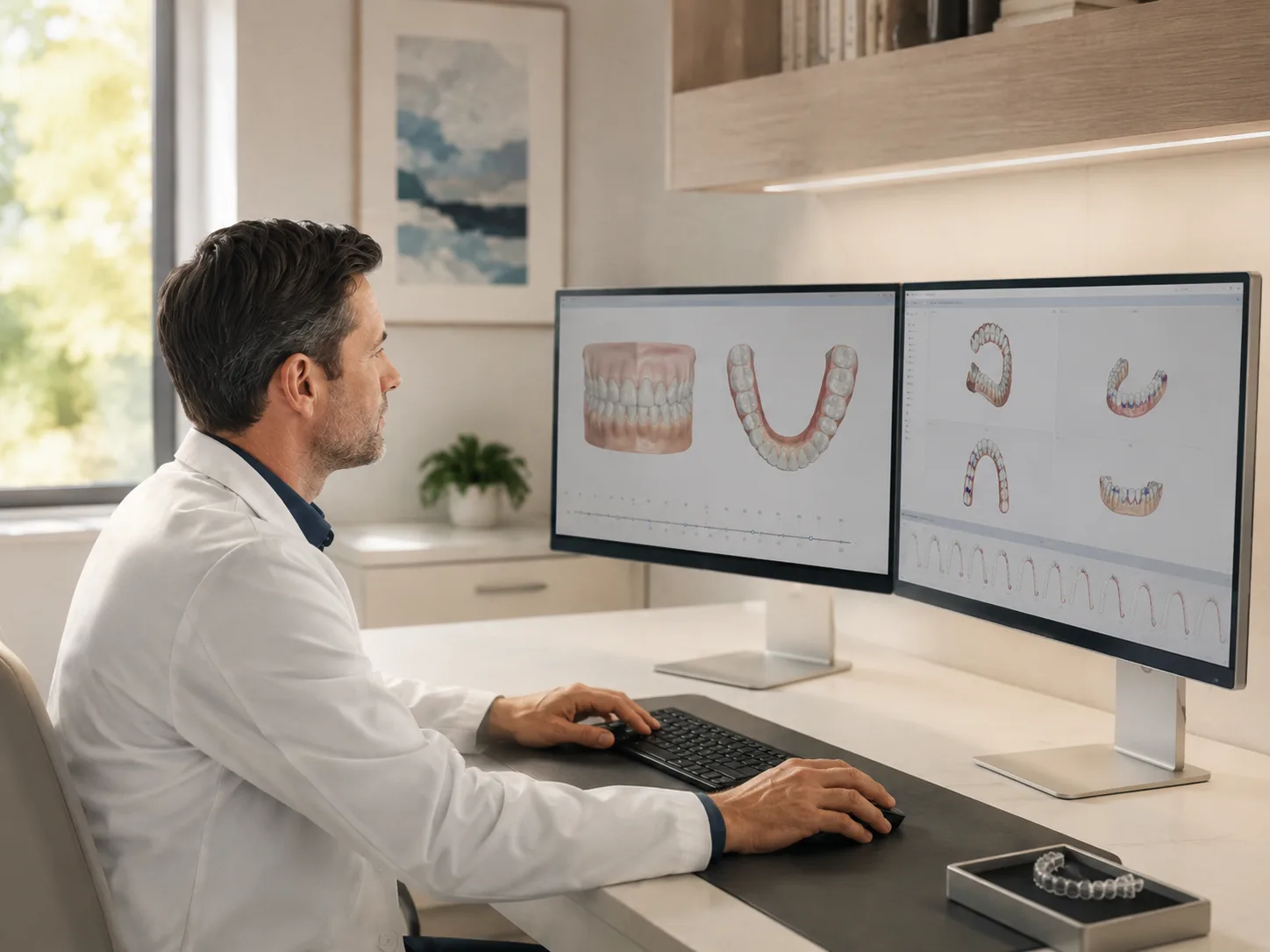
Aligner Magic is a laboratory and fulfillment service. The treatment setup is prepared by a technician from your prescription, and nothing is manufactured until you approve one exact plan version.

You review. You approve. Only then does anything get made.
Manufacturing is blocked in the application and in the database until an unsuperseded approval covers the current plan version. It is not a policy somebody could skip on a busy afternoon.
- Only the prescribing dentist named on the case can approve it
- The approval is bound to one exact plan version and its file fingerprint
- A newer version stops the earlier approval authorising manufacturing
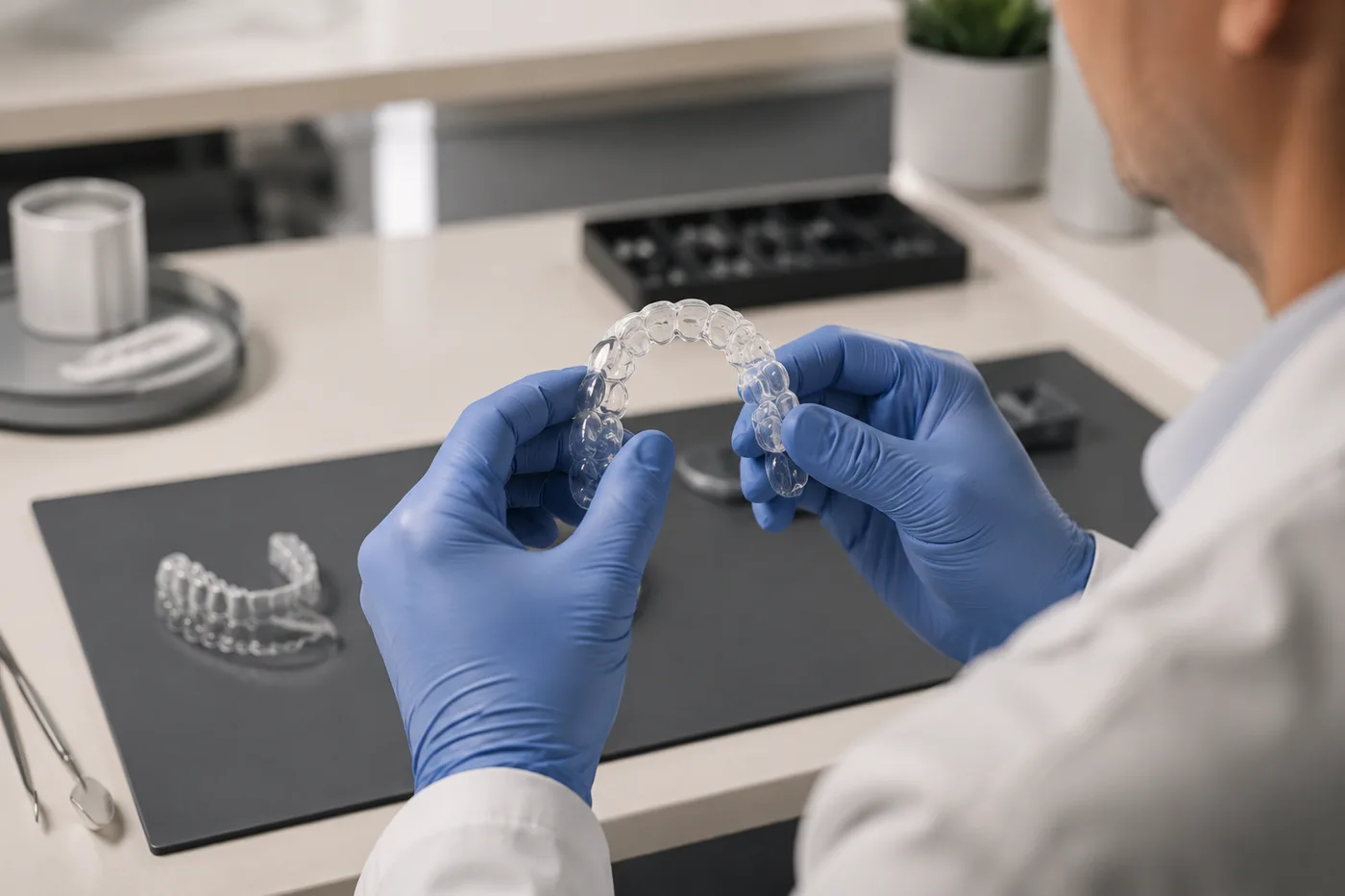
A finished case you can hand over at the chair.
The trim line is the part a patient feels, and it is finished by a technician tray by tray rather than left to the forming step.
- Trays labelled with the case number, the arch and the stage code
- Packed in sequence, upper and lower grouped separately
- Counted against the plan you approved, twice
Your prescription is followed
IPR permission and limits, attachment permission, teeth that must not move, and your treatment objective are recorded as structured instructions — not as free text somebody interprets later.
You approve, or you do not
Only the prescribing dentist named on a case can approve it. Approval binds to a fingerprint of that exact version and its files.
A new version needs new approval
If a revised setup is produced after you approved, the previous approval stops authorising manufacturing. The system will not quietly produce something you did not sign off.
Revisions in writing
Request changes with a written note attached to the version. The technician answers with a new version, and both stay on the record.
Minimal patient data
We do not ask for a patient name. Your own reference and initials identify the case in your practice; the manufacturer sees only an opaque case number.
Checked before it reaches you
Cases are received at our U.S. facility and re-checked against your approved plan before delivery. A case that fails is held, and you are told why.
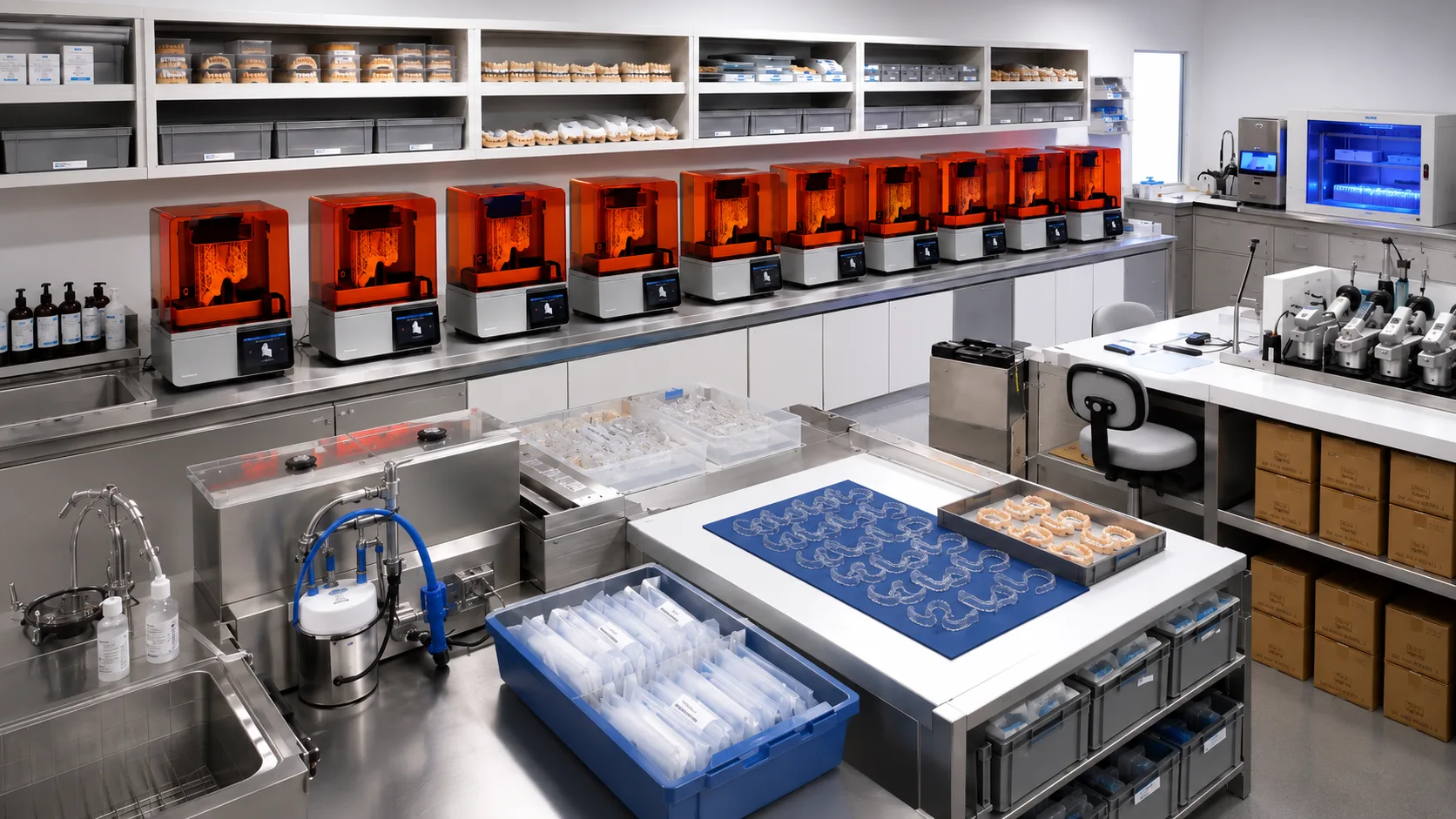
Practice → Aligner Magic workflow → manufacturing.
You never deal with the production floor. It deals with one approved plan version, and the case comes back to us before it comes to you.
What we do not do
Being clear about the boundary is more useful than a longer feature list.
We do not diagnose
Aligner Magic does not assess whether a patient is a candidate for aligner therapy, and does not interpret radiographs or clinical findings.
We do not decide clinical suitability
A treatment setup is a geometric proposal built from your instructions. It is not a statement that the treatment is appropriate or safe for that patient.
We do not approve on your behalf
There is no automatic approval, no approval by operations staff, and no approval by another dentist at your practice unless they are the named prescriber.
We do not claim clearances we do not hold
We do not display regulatory marks, certifications or clearances that have not been supplied and verified. Where documentation is absent, our records say so.
What you see in the portal
- Every case on one timeline, from submission to delivery
- The staged 3D setup, with before, each stage, and final
- Upper and lower stage counts stated separately
- Which records were supplied and which were not
- Version history with every revision note
- The exact wording of every approval, kept permanently
- Quality-check results, including anything held
- Delivery status and who signed for the case
- Invoices, per case, with the line detail

Everything the platform records about a case is reconstructable afterwards: who did what, when, and against which version. That matters less on a good day than on the day somebody asks you a question about a case from eight months ago.
Try it on one case.
No subscription, no minimum, no platform contract. Submit a single case and judge the workflow on what actually arrives.